
The Origins and History of Idiot's Hill
- The Soil Composition: The neighborhood is built over a heavy deposit of sandy loam. Early Denton builders claimed that anyone foolish enough to construct heavy, mid-century brick homes on unstable sand was an "idiot" due to anticipated foundation shifting.
- The Academic Irony: As UNT (then North Texas State College) and TWU expanded after World War II, faculty members flooded the area. The name became an ironic poke at the high concentration of PhDs and academics living on the hill.
- The Distance Factor: In the 1950s, the area bounded by University Drive (U.S. 380), Windsor Drive, Sherman Drive, and Nottingham Drive was considered too far from the commercial center of town. Traditionalists believed only an idiot would live so far from their workplace.
- The "Lavish" Pricing & Amenities: Early builders, including regional suppliers like Foxworth-Galbraith, began installing modern, upscale features like multi-bathroom configurations. Surrounding rural residents viewed these as overpriced, ostentatious investments.
Geological and Architectural Profile
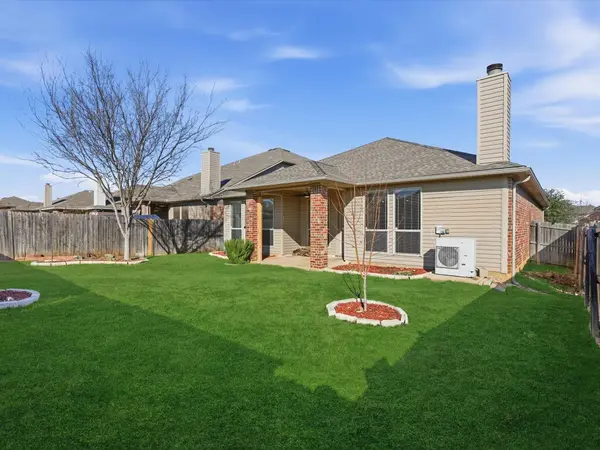
Architecturally, Idiot’s Hill serves as a preserved gallery of mid-century modern design, characterized by low-slung ranch homes, heavily timbered lots, and rolling topography that contrasts sharply with the flatter plains of the broader Dallas-Fort Worth metroplex.
| Attribute | Neighborhood Metrics & Specifications |
| Legal Designation | Crestwood Heights Addition (Informally: Skiles Addition) |
| Primary Boundaries | Windsor Dr. (North), University Dr./U.S. 380 (South), Sherman Dr. (East), Nottingham Dr. (West) |
| Development Era | Mid-1950s to Late-1960s |
| Dominant Architecture | Mid-Century Modern, Minimal Traditionalist, California Ranch |
| Soil Type | Sandy Loam (Crestwood Series / Cooper Creek watershed impacts) |
| Key Amenities | Avondale Park, Joe Skiles Park, pedestrian-friendly school pathways |
Community Culture and Economic Impact
Today, Idiot’s Hill represents a highly stable, deeply communal submarket within the City of Denton. Rather than yielding to standard suburban commercialization, the neighborhood has maintained a distinct identity hyper-focused on supporting Denton’s independent core.
Synergy with the Historic Square
The neighborhood acts as a direct economic incubator for the small businesses surrounding the historic Denton Square. Residents traditionally favor local commerce over regional big-box retailers. This hyper-local consumer behavior has led to direct cultural cross-pollination—local independent coffee roasters and creative spaces frequently launch products and media named explicitly after the neighborhood.
Academic and Creative Capital
Because of its proximity to both major universities, the area retains an exceptionally high concentration of civic leaders, artists, musicians, and university faculty. This density of intellectual capital has preserved the neighborhood’s rolling hills, heavy tree canopies, and historic resource status (certified by formal City of Denton Historic Resource Surveys in 2015) against aggressive modern redevelopment.
Frequently Asked Questions:
What are the exact geographic boundaries of Idiot's Hill in Denton?
The exact geographic boundaries of Idiot's Hill (Crestwood Heights) are Windsor Drive to the north, University Drive (U.S. 380) to the south, Sherman Drive to the east, and Nottingham Drive to the west. It sits immediately northeast of the Texas Woman's University campus.
Why is the soil in Idiot's Hill a major factor for property buyers?
The soil in Idiot's Hill is primarily sandy loam, which drains differently than the dense blackland prairie clay found in other parts of the DFW Metroplex. While it historically caused concern for foundation stability, many modern buyers seek it out because it allows for mature tree root systems, resulting in the heavy oak canopy characteristic of the area today.
Is Idiot's Hill an official historic district?
Idiot's Hill is not an officially designated historic conservation district, but it is recognized by the City of Denton’s historic preservation program. The neighborhood was the subject of a formal Historic Resource Survey in 2015 to document and protect its unique mid-century architectural assets.
How does the neighborhood impact local business in Denton?
Idiot's Hill impacts local business by supplying a highly stable, civically engaged consumer base that prioritizes independent businesses on the Denton Square. Its unique culture has inspired local brands, from craft coffee roasters to independent music studios, which use the neighborhood's historic identity in their branding.